Sleep Paralysis: Dreaming While Awake, and Why It Terrifies
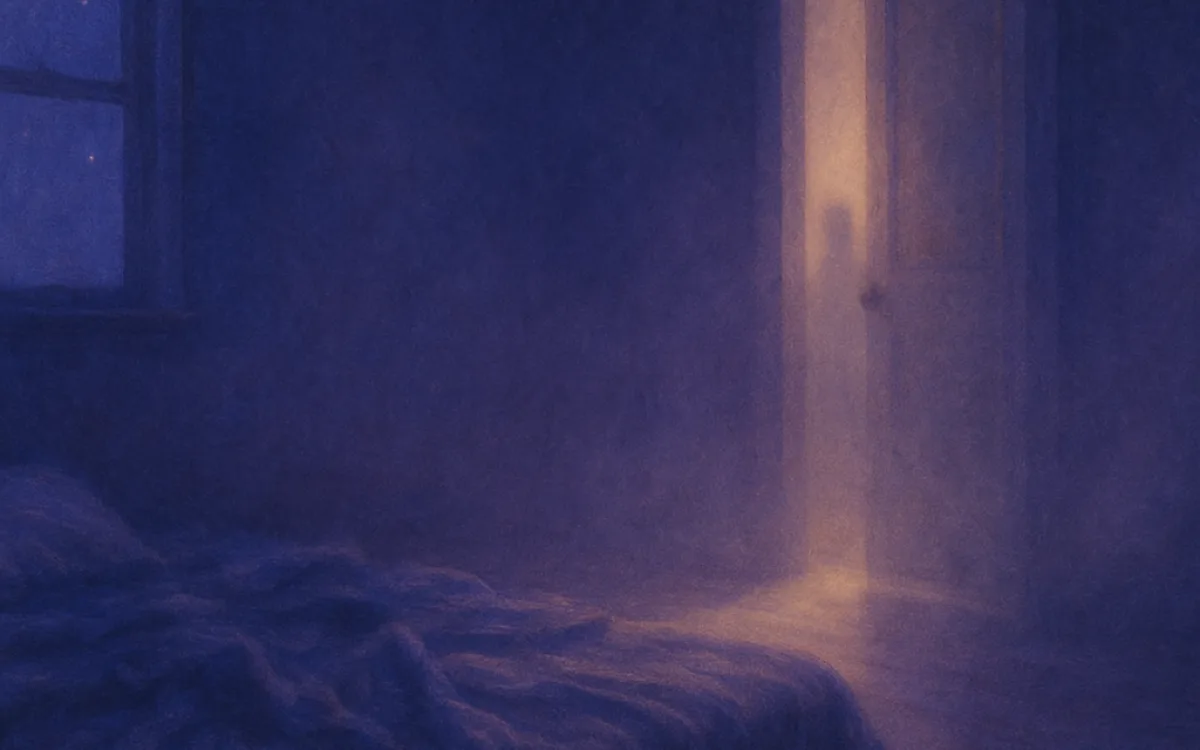
Sleep paralysis is one of the few dream experiences that is frightening in a way the descriptions never quite convey. You are awake. Your eyes work. You cannot move, you cannot speak, your breathing feels constrained, and there is very often someone in the room.
It is also completely explicable, harmless in itself, and reducible. Knowing the mechanism does not make an episode pleasant, but it substantially changes how it lands.
What is happening physically#
During REM sleep your body is paralysed. This is normal and protective — REM atonia is what stops you from acting out your dreams. Sleep paralysis is that mechanism persisting for a few seconds to a couple of minutes after consciousness has returned, or beginning before sleep has fully arrived.
- Consciousness and REM atonia overlap: you are awake in a body that is still switched off.
- Breathing feels restricted because the intercostal muscles are still atonic; the diaphragm keeps working, so you are breathing adequately.
- Dream imagery continues to be generated, which is why hallucinations accompany it.
- Episodes last seconds to a couple of minutes, though they feel far longer.
- It is common: a substantial minority of people experience it at least once.
The sensation of not being able to breathe is the most frightening part and the least dangerous. Your diaphragm is unaffected and you are getting air.
The figure in the room#
The most striking feature is how consistent the hallucination is across cultures that had no contact with one another. A presence, usually malevolent, often at the door or the foot of the bed, sometimes accompanied by pressure on the chest.
| Tradition | The figure |
|---|---|
| Old English | The mare — the origin of the word nightmare |
| Newfoundland | The Old Hag |
| Turkish | Karabasan |
| Japanese | Kanashibari |
| Scandinavian | Mara |
| Contemporary Western | A shadow figure, or an intruder |
The consistency is a strong clue that the figure is generated by the brain state rather than by culture. Culture supplies the name and the costume; the brain supplies the presence.
Why the presence feels so real#
Several systems misfire at once and they reinforce each other. Threat-detection regions are highly active during REM. Your body map is disrupted by the paralysis, which can produce the sense of another body nearby. And the ordinary reality-testing that would normally dismiss the impression is largely offline. The result is a hallucination with the full emotional weight of a real encounter, occurring while you are conscious enough to remember it clearly.
- Hyperactive threat detection supplies the malevolence.
- Disrupted proprioception supplies the sense of a presence.
- Chest pressure comes from the atonic chest wall combined with the fear response.
- Reduced reality-testing means you cannot dismiss any of it in the moment.
Reducing episodes#
- Fix the sleep schedule. Irregular hours and sleep deprivation are the strongest triggers by a wide margin.
- Avoid sleeping on your back if you can. Supine position is associated with more episodes.
- Reduce alcohol, especially close to bedtime.
- Manage stress, which raises frequency.
- Treat any underlying condition — narcolepsy and untreated sleep apnoea both raise the rate substantially.
- See a doctor if episodes are frequent, if you have daytime sleep attacks, or if it is affecting your willingness to sleep.
What to do during an episode#
You cannot force the paralysis to end, but a few things shorten it and reduce the fear.
- Remind yourself what it is. Recognition alone reduces panic considerably, and panic prolongs the episode.
- Do not fight the whole body. Focus on a small movement — a finger, a toe, the eyes — which often breaks it faster than a full effort.
- Concentrate on slow breathing. The diaphragm still works.
- Some people find that trying to cough or make a small sound helps.
- Accept the figure rather than resisting it if you can. Fear amplifies the hallucination and can extend it.
Nothing about an episode is dangerous. The fear is genuine, the threat is not, and that gap is the single most useful thing to know about this experience.
Frequently asked questions
What is sleep paralysis?
It is the normal muscle paralysis of REM sleep persisting into wakefulness, or beginning before you are fully asleep. You are conscious in a body that has not switched back on, and because dream imagery is still being generated you often hallucinate at the same time. Episodes last seconds to a couple of minutes and are harmless, though the feeling is anything but pleasant.
Why do I see a figure during sleep paralysis?
Because threat-detection regions are highly active during REM, your body map is disrupted by the paralysis, and reality-testing is largely offline. The combination reliably produces a sense of a malevolent presence — which is why cultures with no contact between them all describe the same figure under different names, from the Old Hag to Karabasan to Kanashibari.
How do I stop sleep paralysis?
The most effective lever is a regular sleep schedule, since irregular hours and sleep deprivation are the strongest triggers. Avoiding sleeping on your back helps, as does reducing alcohol and managing stress. Frequent episodes, especially alongside daytime sleep attacks, are worth a doctor’s visit — narcolepsy and untreated sleep apnoea both raise the rate substantially.
sleep paralysissleep paralysis causesshadow figure sleep paralysishow to stop sleep paralysiscannot move waking uphypnagogic hallucinations